


Representations of life in the penal settlement at Sydney Cove
CAPTAIN ARTHUR PHILLIP
Source: The Voyage of Governor Phillip to Botany Bay - 1789
Author: Various
Link: The Voyage of Governor Phillip to Botany Bay | University of Sydney Library
Source type: Primary/Early secondary
(The original private journal of Governor Arthur Phillip is not known to survive in full, apart from 20-page fragment, which is available online in digitised form through the University of Sydney, compiled from authentic papers, and the journals of Lieuts. Shortland, Watts, Ball and Capt. Marshall.)
KEY TOPICS COVERED
-
Establishing Sydney Cove
-
Daily life and living conditions
-
Food, farming and livestock
-
Work, crime and punishment
-
Exploration and expansion
-
Building a town
-
Aboriginal people and the British settlement
-
Challenges and hopes for the colony
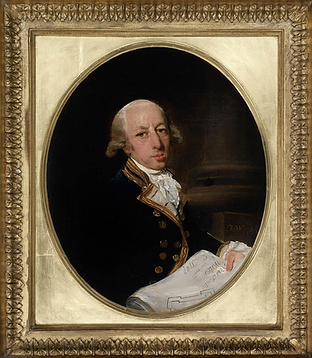
ABOUT:
Captain Arthur Phillip RN was the commander of the First Fleet and commissioned as the first Governor of New South Wales. He set sail on May 13, 1787, from Portsmouth with 11 vessels [Alexander, Lady Penrhyn, Charlotte, Scarborough, Friendship, Prince of Wales; supplies, equipment and livestock on Borrowdale, Fishburn, Golden Grove; navy ships, man-o’-war Sirius and armed tender Supply]. He arrived in NSW with 717 convicts of whom 180 were women, guarded by 191 marines under 19 officers.
(The original private journal of Governor Arthur Phillip is not known to survive in full, apart from 20-page fragment, which is available online in digitised form through the University of Sydney, compiled from authentic papers, and the journals of Lieuts. Shortland, Watts, Ball and Capt. Marshall.)
The Voyage of Governor Phillip to Botany Bay (1789) is an illustrated travel and colonial report documenting the First Fleet’s expedition from England to Australia. Published anonymously in London soon after the fleet’s arrival, it provides the earliest detailed English-language account of the establishment of the colony at Port Jackson (modern Sydney).
The book was not written by Governor Arthur Phillip and is not a pure primary source. It is a compiled secondary source made from multiple primary sources.
Historians believe the book was compiled from official documents, including:
-
Governor Arthur Phillip's dispatches
-
Journals of Captain John Hunter
-
Accounts from Watkin Tench
-
Official government reports sent back to London
-
Possibly other officers' notes and records
-
Because of this, the book reads like an official narrative rather than a personal diary.
Extracts from The Voyage of Governor Phillip to Botany Bay
"...As the month of February advanced heavy rains began to fall, which pointed out the necessity of procuring shelter for the people as soon as possible... Only sixteen carpenters could be hired from all the ships; among the convicts no more than twelve were of this profession... One hundred convicts were added as labourers; but with every effort, it was found impossible to complete either the barracks for the men, or the huts for the officers, as soon as was desired. As late as the middle of May these were yet unfinished, as well as the hospital, and the storehouse for those provisions which were not landed at first. The Governor himself at that time was still lodged in his temporary house of canvas, which was not perfectly impervious either to wind or weather.
Norfolk Island settlement
February 14, 1788
On the 14th of February a party was sent out in the Supply, to settle on a small island... which was discovered and much commended by Captain Cook, and by him named Norfolk Island... To the office of superintendent and commandant of this island and the settlement to be made upon it, Governor Phillip appointed Philip Gidley King, second lieutenant of his Majesty's ship Sirius, an officer much esteemed by him as of great merit in his profession... As it was known that there were no inhabitants on Norfolk Island, there were sent with Lieut. King only a small detachment, consisting of one subaltern officer, six marines, a very promising young man who was a midshipman, a surgeon, two men who understood the cultivation and dressing of flax, with nine men and six women convicts... (Instructions issued to King as part of his commission included establishing a settlement, cultivation of flax, cotton and corn,)
February 1788 to March 1788 - Criminal Court held — Broken Bay explored — Interviews with the Natives — Peculiarities remarked — Courage of an old man
GOVERNOR PHILLIP soon found... the strict enforcement of the sanctions of law was peculiarly necessary. There were in it many individuals whom neither lenity could touch, nor rigour terrify; who, with all sense of social duty, appeared to have lost all value for life itself... Towards the latter end of February a criminal court was convened, in which six of the convicts received sentence of death. One, who was the head of the gang, was executed the same day of the rest, one was pardoned; the other four were reprieved, and afterwards exiled to a small island within the bay, where they were kept on bread and water. These men had frequently robbed the stores, and of other convicts...
On the 2d of March Governor Phillip went with a long boat and cutter to examine the broken land, mentioned by Captain Cook, about eight miles to the northward of Port Jackson, and by him named Broken Bay. This bay proved to be very extensive...
Large trees were seen growing even on the summits of the mountains, which appeared accessible only to birds. Immediately round the headland that forms the southern entrance into the bay, there is a third branch, which Governor Phillip thought the finest piece of water he had ever seen; and which therefore he thought worthy to be honoured with the name of Pitt Water...
In this excursion some interviews with the natives took place. When the party first landed in Broken Bay several women came down to the beach with the men. One of these, a young woman, was very talkative and remarkably cheerful. This was a singular instance, for in general they are observed on this coast to be much less cheerful than the men, and apparently under great awe and subjection. They certainly are not treated with much tenderness, and it is thought that they are employed chiefly in the canoes, in which women have frequently been seen with very young children at the breast... It was now first observed by the Governor that the women in general had lost two joints from the little finger of the left hand... he at first conjectured this privation to be a part of the marriage ceremony; but going afterwards into a hut where were several women and children, he saw a girl of five or six years of age whose left hand was thus mutilated...
The men are distinguished in a different manner... most of them want the right front tooth in the upper jaw. Governor Phillip having remarked this, pointed out to them that he had himself lost one of his front teeth, which occasioned a general clamour, and it was thought he derived some merit in their opinion from this circumstance. The perforation of the cartilage that divides the nostrils, and the strange disfiguring ornament of a long bone or stick thrust through it, was now observed...
... (Their scars) are of a very singular nature: sometimes the skin is raised from the flesh for several inches... Their bodies are scarred in various parts, particularly about the breast and arms, and frequently on the instep... (With the women) there was a shyness and timidity among them which frequently kept them at a distance... We are not yet enough acquainted with the manners of the people to decide whether this reserve proceeds from the fears of the women, or from the jealousy of their husbands, by whom they are evidently kept in great subordination.
One of their modes of fishing was now observed: their hooks are made of the inside of a shell resembling mother of pearl. When a fish which has taken the bait is supposed to be too strong to be landed with the line, the canoe is paddled to shore, and while one man gently draws the fish along, another stands prepared to strike it with a spear: in this attempt they seldom fail. In the plate which represents this action, the engraver has inadvertently left the bodies of the figures rather too white; in other respects it is very accurate.
When the southern branch of Broken Bay was first visited... An attempt was made to land... an old man and a youth were standing on the rocks where the boat was trying to approach... (and) were very solicitous to point out the deepest water. Afterwards they brought fire and seemed willing to render any service in their power... He afterwards assisted in clearing away the bushes and making preparations for the party to sleep on shore, and next morning was rewarded with presents for his very friendly behaviour. Two days afterwards, when Governor Phillip returned to the same spot, the old man met him with a dance and a song of joy. His son was with him, and several of the natives; a hatchet was given them and other presents; and as Governor was to return next day to Port Jackson, it was hoped that the friendship thus begun, and so studiously cultivated, would have continued firm. But as soon as it was dark, the old man stole a spade and was caught with it in his hand. Governor Phillip thought it necessary to shew some tokens of displeasure, and therefore when the delinquent approached, he gave him two or three slight slaps on the shoulder, and then pushed him away, at the same time pointing to the spade. This gentle chastisement at once destroyed their friendship. The old man immediately seized a spear, and coming close up to the Governor, poised it, and seemed determined to strike. But ... in a few moments he dropped the spear and went away. It was impossible not to be struck with the courage displayed on this occasion, for Governor Phillip was not alone... From this and other similar events, personal bravery appears to be a quality in the natives of New South Wales...
9th of March... Governor Phillip returned to Port Jackson, having gained some useful knowledge of the country, and maintained an intercourse with the natives without departing from his favourite plan of treating them with the utmost kindness. He had endeavoured at the same time to gain their confidence, if possible, and secure their friendship...
March 1788 to May 1788 - Three transports cleared — Two excursions into the country — Livestock killed
"25th of March, the Charlotte, Lady Penrhyn, and Scarborough transports, having been cleared of all their stores, were discharged from government service, and left at liberty to proceed for China. The other ships were of necessity detained till the store-houses could be finished.
April was not distinguished by any events that deserve to be related, except two expeditions of Governor Phillip for the purpose of exploring the country... At the distance of about fifteen miles from the sea coast Governor Phillip obtained a very fine view of the inland country and its mountains... Governor Phillip, who had not been perfectly well even at the time of setting out on the excursion to Broken Bay, had then contracted a severe pain in his side, by sleeping frequently on the wet ground. This complaint had in the two last journeys received so much increase, that he found it absolutely necessary to allow himself the respite of a few weeks, before he again encountered so much fatigue.
The country explored in this last journey was so good and so fit for the purposes of cultivation, that the Governor resolved to send a detachment to settle there, as soon as a sufficient number could be spared from works of more immediate necessity.
Governor Phillip, on his return from this excursion, had the mortification to find that five ewes and a lamb had been killed very near the camp... How this had happened was not known, but it was conjectured that they must have been killed by dogs belonging to the natives. The loss of any part of the stock of cattle was a serious misfortune... Fish affords only an uncertain resource: on some days great quantities are caught... but at times it is very scarce...
From the great labour which attended the clearing of the ground it proved to be impracticable to sow more than eight or ten acres with wheat and barley; and it was apprehended that even this crop would suffer from the depredations of ants and field mice..."
May 1788 to June 1788 - Convicts assaulted by natives — excursion to Botany Bay by land — Interview natives — Fourth of June celebrated — Climate
... one of the convicts who, in searching for vegetables, had gone a considerable way from the camp, returned very dangerously wounded in the back. He said that another man who had gone out for the same purpose, had been carried off by the natives in his sight, after having been wounded in the head. A shirt and hat were afterwards found, both pierced with spears, in one of the huts of the natives; but no intelligence of the man could be gained. There could be little doubt that the convicts had been the aggressors, though the man who returned strongly denied having given any kind of provocation.
13th of May... two men who had been employed in collecting rushes for thatch at some distance from the camp, were found dead. One of them had four spears in his body... the other had not any marks of violence upon him. In this case it was clearly proved that the first injury had been offered by the unfortunate men, who paid so dearly for their dishonesty and disobedience of orders; for they had been seen with a canoe, which they had taken from one of the fishing places. These events were much regretted by Governor Phillip, as tending entirely to the frustration of the plan he had so much at heart, of conciliating the affections of the natives, and establishing a friendly intercourse with them.
As the rush-cutters had all been carried away, the Governor thought it might be possible to discover the natives who had been concerned in this unfortunate affair; and to make them understand that the conduct of their assailants... was very highly disapproved... he went out with a small party, consisting altogether of twelve persons, and landed at the place where the men were killed. After traversing the country for more than twenty miles, they came at the north shore of Botany Bay, without having met with one of the natives.
...Governor Phillip determined to return to Port Jackson; but as he went, he discovered a great number of the natives, apparently more than could belong to that district, assembled at the mouth of a cove. The party was within ten yards of them before they were perceived, and the Governor had hardly time to make his people halt before numbers appeared in arms. The man who seemed to take the lead, as he advanced made signs for the English to retire, but when he saw Governor Phillip approach alone, unarmed, and in a friendly manner, he gave his spear away and met him with confidence. In less than three minutes the English party found itself surrounded by 212 men... The moment the offered friendship was accepted on their side, they laid down their spears and stone hatchets, and joined the party in the most amicable manner. Numbers of women and children remained at a small distance, some of whom the men afterwards brought down to receive the little articles which were offered as presents. Nothing was seen among these people which could at all prove that any of them had been engaged in the affray with the rush-cutters; and the Governor parted with them on the most friendly terms, but more convinced than ever of the necessity of treating them with a proper degree of confidence, in order to prevent disagreement...
No very good fortune had hitherto attended the live stock belonging to the settlement, but the heaviest blow was yet to come. About this time the two bulls and four cows, belonging to Government, and to the Governor, having been left for a time by the man who was appointed to attend them, strayed into the woods, and though they were traced to some distance, never could be recovered. This was a loss which must be for some time irreparable.
The fourth of June was not suffered to pass without due celebration. It was a day of remission from labour, and of general festivity throughout the settlement. At sun-rise the Sirius and Supply fired each a salute of twenty-one guns, and again at one o’clock, when the marines on shore also saluted with three volleys. At sunset the same honours were a third time repeated from the ships; large bonfires were lighted, and the whole camp afforded a scene of joy. That there might not be any exception to the happiness of this day, the four convicts who had been reprieved from death, and banished to an island in the middle of the harbour, received a full pardon, and were sent for to bear their part in the general exultation. The Governor's... own house was the centre of conviviality to all who could be admitted to that society...
It was now, it seems, first generally known, that the name of Cumberland County ... leaving the chief place of settlement at Sydney Cove nearly in the centre.
22d of June... there was a slight shock of an earthquake, which did not last more than two or three seconds. It was felt by most people in the camp...
24th, a convict who had absconded on the 5th, having been guilty of a robbery, returned into the camp almost starved. He had hoped to subsist in the woods but found it impossible. One of the natives gave him a fish, and then made signs for him to go away... He was of opinion that the natives were at this time in great distress for food, and said, that he had seen four of them dying in the woods, who made signs for something to eat, as if they were perishing through hunger. It is certain that very little fish could be caught at this time...
It was now sufficiently ascertained, that though the necessity of subsisting so long chiefly upon salt provisions, and of remaining encamped in very wet weather had produced the scurvy, and other disorders common in such circumstances, the climate itself wherein this new settlement is fixed is mild and salubrious. Heavy rains had generally attended the changes of the moon during the winter months, but there had not been any time that could properly be called a rainy season...
June 1788 to July 1788 - Sydney Cove — Buildings — The intended town
"THERE are few things more pleasing than the contemplation of order and useful arrangement, arising gradually out of tumult and confusion; and perhaps this satisfaction cannot anywhere be more fully enjoyed than where a settlement of civilized people is fixing itself upon a newly discovered or savage coast.
The wild appearance of land entirely untouched by cultivation, the close and perplexed growing of trees, interrupted now and then by barren spots, bare rocks, or spaces overgrown with weeds, flowers, flowering shrubs, or underwood, scattered and intermingled in the most promiscuous manner, are the first objects that present themselves; afterwards, the irregular placing of the first tents which are pitched, or huts which are erected for immediate accommodation, wherever chance presents a spot tolerably free from obstacles, or more easily cleared than the rest, with the bustle of various hands busily employed in a number of the most incongruous works, increases rather than diminishes disorder, and produces a confusion of effect, which for a time appears inextricable... But by degrees large spaces are opened, plans are formed, lines marked, and a prospect at least of future regularity is clearly discerned, and is made the more striking by the recollection of the former confusion.
To this latter state the settlement at Sydney Cove had now at length arrived, and is so represented in the plan annexed. Lines are there traced out which distinguish the principal street of an intended town, to be terminated by the Governor’s house, the main guard, and the criminal court. In some parts of this space temporary barracks at present stand, but no permanent buildings will be suffered to be placed, except in conformity to the plan laid down. Should the town be still further extended in future, the form of other streets is also traced in such a manner as to ensure a free circulation of air. The principal streets, according to this design, will be two hundred feet wide; the ground proposed for them to the southward is nearly level, and is altogether an excellent situation for buildings. It is proposed by Governor Phillip that when houses are to be built here, the grants of land shall be made with such clauses as will prevent the building of more than one house on one allotment, which is to consist of sixty feet in front, and one hundred and fifty feet in depth. These regulations will preserve a kind of uniformity in the buildings, prevent narrow streets, and exclude many inconveniences which a rapid increase of inhabitants might otherwise occasion hereafter. It has been also an object of the Governor’s attention to place the public buildings in situations that will be eligible
at all times, and particularly to give the storehouses and hospital sufficient space for future enlargement, should it be found necessary.
First huts ~ Buildings
The first huts that were erected were composed of very perishable materials, the soft wood of the cabbage palm, being only designed to afford immediate shelter. The necessity of using the wood quite green made it also the less likely to prove durable. The huts of the convicts were still more slight, being composed only of upright posts, wattled with slight twigs, and plastered up with clay. Barracks and huts were afterwards formed of materials rather more lasting. Buildings of stone might easily have been raised, had there been any means of procuring lime for mortar. The stone which has been found is of three sorts: A fine free stone, reckoned equal in goodness to that of Portland; an indifferent kind of sand stone, or firestone; and a sort which appears to contain a mixture of iron. But neither chalk, nor any species of lime-stone, has yet been discovered. In building a small house for the Governor on the eastern side of the Cove, (marked 1 in the plan) lime was made of oyster shells, collected in the neighbouring coves; but it cannot be expected that lime should be supplied in this manner for many buildings, or indeed for any of great extent. Till this difficulty shall be removed by the discovery of chalk or lime-stone, the public buildings must go on very slowly, unless care be taken to cut out those materials as ballast in all the ships destined for Port Jackson. In the mean time the materials can only be laid in clay, which makes it necessary to give great thickness to the walls, and even then they are not so firm as might be wished. Good clay for bricks is found near Sydney Cove, and very good bricks have been made. The wood, from the specimens that have been received in England, appears to be good; it is heavy indeed, but fine grained, and apparently strong, and free from knots. The imperfections that were found in it at first arose probably from the want of previous seasoning.
Hospital ~ Church ~ Observatory ~ Governor's House
The hospital is placed on the west side of the Cove, in a very healthful situation, entirely clear of the town; and is built in such a manner as to last for some years. On the high ground between the hospital and the town, if water can be found by sinking wells, it is the Governor’s intention to erect the barracks, surrounding them with proper works. These were to have been begun as soon as the transports were cleared, and the men hutted, but the progress of work was rendered so slow by the want of an adequate number of able workmen, that it was necessary to postpone that undertaking for a time. The ground marked out for a church lies still nearer to the town, so that this edifice will form in part one side of the principal parade. The design which demanded the most immediate execution was that of a storehouse, which might be secure from the danger of fire. In a country exposed to frequent storms of thunder and lightning, it was rather an uneasy situation to have all the provisions and other necessaries lodged in wooden buildings, covered with thatch of the most combustible kind. On the point of land that forms the west side of the Cove, and on an elevated spot, a small observatory has been raised under the direction of Lieutenant Dawes, who was charged by the Board of Longitude with the care of observing the expected comet...
A small house, built by the Lieutenant Governor for himself, forms at present the corner of the parade; the principal street will be carried on at right angles with the front of this building. Instead of thatch, they now use shingles made from a tree in appearance like a fir, but producing a wood not unlike the English oak. This, though more secure than thatching, is not enough for storehouses. For these, if slate-stone should not be found, tiles must be made of the clay which has been used for bricks. The principal farm is situated in the next cove to the east of the town, and less than half a mile from it. When the plan was drawn it contained about nine acres laid down in corn of different kinds. Later accounts speak of six acres of wheat, eight of barley, and six of other grain, as raised on the public account, and in a very promising way...
Vegetables ~ Gardens ~ Livestock ~ Rose Hill (Parramatta)
The climate at Sydney Cove is considered, on the whole, as equal to the finest in Europe. The rains are not ever of long duration, and there are seldom any fogs: the soil, though in general light, and rather sandy in this part, is full as good as usually is found so near the sea-coast. All the plants and fruit trees brought from Brasil and the Cape, which were not damaged in the passage, thrive exceedingly; and vegetables have now become plentiful, both the European sorts and such as are peculiar to this country. In the Governor’s garden are excellent cauliflowers, and melons very fine of their kinds. The orange trees flourish, and the fig trees and vines are improving still more rapidly. In a climate so favourable, the cultivation of the vine may doubtless be carried to any degree of perfection; and should not other articles of commerce divert the attention of the settlers from this point, the wines of New South Wales may, perhaps, hereafter be sought with avidity, and become an indispensable part of the luxury of European tables.
The rank grass under the trees, unfortunately proved fatal to all the sheep purchased by Governor Phillip, on his own and on the public account. Those which private individuals kept close to their own tents, and fed entirely there, were preserved. Hogs and poultry not only thrive but increase very fast; black cattle will doubtless succeed as well, and it will be easy in future to secure them from straying. The horses have not met with any accident.
The last despatches from Governor Phillip bring an account of his having sent a small detachment up to that ground at the upper end of Port Jackson, which he discovered in one of his excursions to be so highly fit for cultivation. This party consisted of a captain, two lieutenants of marines, with twenty-five non-commissioned officers and privates: about fifty convicts were added as labourers. This spot is very pleasant, and has been named by the Governor, Rose-hill. The flax-plant, which was seen at the first arrival of our people, has not been found since in any great abundance. A most ample supply of this valuable article may, however, always be obtained from Norfolk Island. Governor Phillip, when he judged the seeds to be ripe, ordered men to be collected, but at that time very few of the plants were found, and not any in the places where the greatest quantity had been seen. It is thought that the natives pull up the plant when it is in flower to make their fishing lines.
Positivity for future prospects
On the whole, notwithstanding the difficulties and disadvantages at first experienced, which, though great, were not more than must naturally be expected to occur in such an undertaking; notwithstanding the sicknesses which from various causes prevailed for some time among the people, the settlement at Sydney Cove wore a very promising aspect at the time when the last accounts were sent; and there can be no doubt that it will be found hereafter fully to answer every expectation which was formed when the design was projected. The scantiness of the streams of fresh water was thought at first unfavourable, but good springs have since been found by digging. The house built for Governor Phillip stands about fifty-six feet above high-water mark; and there, by sinking a well about fifteen feet in the rock, an excellent spring of pure water has been obtained.
July 1788 ~ October 1788 - Aborigines
ON the ninth of July, an effort was made by a party of natives, which seems to indicate that they were still distressed for provisions, or that they very highly resent the encroachments made upon their fishing places. A general order had been issued to those sent out on fishing parties, to give a part of what was caught to the natives if they approached, however small the quantity taken might be; and by these means they had always been sent away apparently satisfied. But on this day, about twenty of them, armed with spears, came down to the spot where our men were fishing, and without any previous attempt to obtain their purpose by fair means, violently seized the greatest part of the fish which was in the seine. While this detachment performed this act of depredation, a much greater number stood at a small distance with their spears poised, ready to have thrown them if any resistance had been made. But the cockswain who commanded the fishing party, very prudently suffered them to take away what they chose, and they parted on good terms. This is the only instance in which these people have attempted any unprovoked act of violence, and to this they probably were driven by necessity. Since this transaction, an officer has always been sent down the harbour with the boat.
Governor Phillip went out about this time with a small party, to examine the land between Port Jackson and Broken Bay. Here were found many hundred acres of land, free from timber, and very fit for cultivation. He proceeded as far as Pitt Water, and saw several of the natives, but none of them chose to approach. When the party returned to the boats near the mouth of the harbour, about sixty of these people, men, women, and children, were assembled there. Some hours were passed with them in a peaceful and very friendly manner, but though in all this time they discovered no uneasiness, they seemed best pleased when their visitors were preparing to depart. This has always been the case, since it has been known among them that our people intend to remain on the coast. Many of the women were employed at this time in fishing, a service which is not uncommonly performed by them, the men being chiefly occupied in making canoes, spears, fish-gigs, and the other articles that constitute their small stock of necessary implements. Two women were here observed to be scarred on the shoulders like the men; this was the first instance in which they had been seen so marked...
As it had been supposed that many of the natives had left this part of the coast, on account of the great scarcity of fish, the different coves of the harbour were examined in one day. At this time, not more than sixty-seven canoes were counted, and about one hundred and thirty of the people were seen. But it was the season in which they make their new canoes, and large parties were known to be in the woods for that purpose.
A few days after this examination, Governor Phillip himself went again to explore the coast between Port Jackson and Botany Bay. In this journey few of the natives were seen, but new proofs were observed of their having been distressed for food. In the preceding summer they would not eat either the shark or the sting-ray, but now even coarser meat was acceptable, and indeed any thing that could afford the smallest nourishment. A young whale had just been driven upon the coast, which were busily employed in carrying away. All that were seen at this time had large pieces of it, which appeared to have been laid upon the fire only long enough to scorch the outside. In this state they always eat their fish, never broiling it for more than a few minutes; they broil also the fern root, and another root, of which the plant is not yet known; and they usually eat together in families. Among the fruits used by them is a kind of wild fig; and they eat also the kernels of that fruit which resembles a pine-apple... The winter months, in which fish is very scarce upon the coast, are June, July, August, and part of September. From the beaten paths that are seen between Port Jackson and Broken Bay, and in other parts, it is thought that the natives frequently change their situation, but it has not been perceived that they make any regular migrations to the northward in the winter months, or to the south in summer.
...The twine of which (their nets) are made, appears to be composed of fibres of the flax plant, with very little preparation; it is very strong, heavy, and so admirably well twisted as to have the appearance of the best whipcord. Governor Phillip mentions having had lines of their manufacture, which were made from the fur of some animal, and others that appeared to be of cotton. The meshes of their nets are formed of large loops, very artificially inserted into each other, but without any knots...
The inhabitants of New South Wales have very few ornaments, except those which are impressed upon the skin itself, or laid on in the manner of paint. The men keep their beards short, it is thought by scorching off the hair, and several of them at the first arrival of our people seemed to take great delight in being shaved. They sometimes hang in their hair the teeth of dogs, and other animals, the claws of lobsters, and several small bones, which they fasten there by means of gum; but such ornaments have never been seen upon the women. Though they have not made any attempt towards clothing themselves, they carry by no means insensible of the cold, and appear very much to dislike the rain. During a shower they have been observed to cover their heads with pieces of bark, and to shiver exceedingly. Governor Phillip was convinced by these circumstances that clothing would be very acceptable to them, if they could be induced to come enough among the English to learn the use of it. He has therefore applied for a supply of frocks and jackets to distribute among them, which are to be made long and loose, and to serve for either men or women.
The bodies of these people in general smell strongly of oil, and the darkness of their colour is much increased by dirt ... Bread and meat they seldom refuse but generally throw it away soon after. Fish they always accept very eagerly...
When the latest accounts arrived from Port Jackson, the natives still avoided all intercourse with our settlement, whether from dislike or from contempt is not perfectly clear. They think perhaps that we cannot teach them any thing of sufficient value to make them amends for our encroachments upon their fishing places. They seem to be among themselves perfectly honest, and often leave their spears and other implements upon the beach, in full confidence of finding them untouched. But the convicts too frequently carry them off, and dispose of them to vessels coming to England, though at the hazard on one side of being prosecuted for theft, and on the other for purchasing stolen goods. Injuries of this nature generally revenge on such stragglers as they happen to meet; and perhaps have already learnt to distinguish these freebooters, by their blue and yellow jackets, as they very early did the soldiers by their red clothes. Beyond these attacks they have not yet committed any open acts of hostility, except the seizing of the fish in the instance above related...Conciliation is the only plan intended to be pursued. But Governor Phillip, when he last wrote, seemed to despair of getting any of them to remain among his people, long enough for either to acquire the language of the other, except by constraint. Hitherto he has been unwilling to take this method, but if it can be done in such a manner as not to create any general alarm among them, it will probably turn out to be the kindest piece of violence that could be used. Whenever it shall be practicable, by any means, to explain to them the friendly disposition of Governor Phillip and his people towards them, and to make them understand, that the men from whom they receive occasional injuries, are already a disgraced class, and liable to severe punishment for such proceedings, they will then perhaps acquiesce sufficient confidence in their countrymen to mix with them, to enrich themselves with some of their implements, and to learn and adopt some of the most useful and necessary of their arts. It may, indeed, admit of a doubt whether many of the accommodations of civilized life, be not more than counterbalanced by the artificial wants to which they give birth; but it is undeniably certain that to teach the shivering savage how to clothe his body, and to shelter himself completely from the cold and wet, and to put into the hands of men, ready to perish for one half of the year with hunger, the means of procuring constant and abundant provision, must be to confer upon them benefits of the highest value and importance.
According to the latest advices from Governor Phillip, the Sirius sailed for the Cape on the 2d of October, 1788, to purchase grain, flour, and other necessaries. Live stock was not to be procured by this ship, as being less wanted in the present state of the settlement, which had provisions in store for eighteen months, but not grain enough for seed, and for the support of cattle... At this time the officers were all in separate houses, and the whole detachment comfortably lodged, though the barracks were yet unfinished. Nothing more, that requires to be related, has yet been heard from the settlement.
DOWNLOAD ARTICLE: Arthur Phillip - Representations of life in the penal settlement at Sydney Cove
CAPTAIN ARTHUR PHILLIP'S OFFICIAL CORRESPONDENCE TO LORD SYDNEY - 1788-1790
Arthur Phillip’s official correspondence to Lord Sydney provides a first-hand account of the challenges and development of the early penal settlement.
KEY TOPICS COVERED:
-
Building the Sydney Cove settlement
-
Convict labour and skills
-
Food supplies and survival
-
Farming and agriculture
-
Problems with food and stores
-
Crime and punishment
-
Health and population
-
Expansion beyond Sydney Cove
-
Plans for free settlement and self-sufficiency
Letter to Lord Sydney from Port Jackson, July 9, 1788
Military barracks, convicts indolent
"...Hutting the battalion is still going on, and though from seventy to one hundred convicts have been almost constantly employed assisting in this business, it will not, I apprehend, be finished before the end of July; and every day proves the necessity of proper persons being sent out to superintend the convicts. If a small number of carpenters and bricklayers are sent out with proper people, who are capable of superintending the convicts, they will soon be rendered serviceable to the State, and without which they will remain for years a burden to Government.
Numbers of them have been brought up from their infancy in such indolence that they would starve if left to themselves; and many from old age and disorders which are incurable, and with which they were sent from England, are incapable of any kind of work.
Second request for provisions, governor's house
Thus situated, your Lordship will excuse my observing a second time that a regular supply of provisions from England will be absolutely necessary for four or five years, as the crops for two years to come cannot be depended on for more than what will be necessary for seed... Should necessity oblige us to make use of what that ship may be able to procure, I do not apprehend that the livestock she will bring in twelve months will be more that a month's provision for the colony...
I should hope that few convicts will be sent out this year or the next, unless they are artificers... The ships that bring out convicts should have at least two years' provisions on board to land with them...
The Lieutenant-Governor has already begun a small house, which forms one corner of the parade, and I am building a small cottage on the east side of the cove, where I shall remain for the present with part of the convicts and an officer's guard. The convicts on both sides are distributed in huts, which are built only for immediate shelter. On the point of land which forms the west side of the cove an Observatory is building, under the direction of Lieutenant Dawes, who is charged by the Board of Longitude with observing the expected comet...
As stores and other buildings will be begun in the course of a few months, some regular plan for the town was necessary, and in laying out of which I have endeavoured to place all public buildings in situations that will be eligible hereafter..."
Letter to Lord Sydney from Sidney Cove, February 12, 1790
Norfolk Island & Lord Howe's Island
"When the Supply left Norfolk Island, the people were all very healthy, and they had vegetables in the greatest abundance ; and they got fish when the weather permits for the boats to go without the reef, and at times in such quantities, that fish is served to the people in lieu of salt provisions. They make their lines from the flax plant ; but unfortunately we have not any person who understands how to dress it...
Lord Howe's Island, has been examined, but no fresh water, or good anchorage being found, it can be of no other advantage to this settlement, than occasionally supplying a few turtles.
Rose Hill (Parramatta) established November 1788, soil and crops, vegetables
I had the honour of informing your Lordship, that a settlement was intended to be made at a place I named Rose Hill. At the head of this harbour there is a creek, which, at half flood, has water for large boats to go three miles up ; and one mile higher the water is fresh, and the soil is good. A very industrious man, whom I brought from England, is employed there at present, and has under his direction one hundred convicts, who are employed in clearing and cultivating the ground. A barn, granary, and other necessary buildings are erected, and twenty-seven acres in corn promise a good crop.
The soil is good, and the country, for twenty miles to the westward, which is as far as I have examined, lies well for cultivation ; but even there the labour of clearing the ground is very great ; and I have seen none that can be cultivated without cutting down the timber...
At Sydney Cove, all the Officers are in good huts, and the men in the barracks ; and although many unforeseen difficulties have been met with, I believe there is not an individual, from the Governor to the private Soldier, whose situation is not more eligible at this time ... and those who have been any ways industrious, have vegetables in plenty. The buildings now carrying on, are of brick and stone. The house intended for myself, was to consist of only three rooms ; but having a good foundation, has been enlarged, contains six rooms, and is so well built, that I presume it will stand for a great number of years.
Stores over-run by rats
The stores have been lately over-run with rats, and they are equally numerous in the gardens... many casks of flour and rice were found to be damaged, or totally destroyed. The loss in these two articles by the rats, since landing, has been more than twelve thousand weight.
Vegetables and provisions having been frequently stolen in the night, from convicts and others, twelve convicts were chosen as a night watch, and they have actually answered the end proposed, no robbery having been committed for several months ; and the convicts in general have behaved better than I ever expected. Only two convicts have suffered death in the last year; four were executed in the first year.
Deaths and births at the end of first two years
The stores have been lately over-run with rats, and they are equally numerous in the gardens... many casks of flour and rice were found to be damaged, or totally destroyed. The loss in these two articles by the rats, since landing, has been more than twelve thousand weight.
Vegetables and provisions having been frequently stolen in the night, from convicts and others, twelve convicts were chosen as a night watch, and they have actually answered the end proposed, no robbery having been committed for several months ; and the convicts in general have behaved better than I ever expected. Only two convicts have suffered death in the last year; four were executed in the first year.
As near two years have now passed since we first landed in this country, some judgment may be formed of the climate ; and I believe a finer, or more healthy climate, is not to be found in any part of the world. Of 1030 people who were landed, many of whom were worn out by old age, the scurvy and various disorders, only 72 have died in 21 months, and by the Surgeon's return it appears, that 26 of those died from disorders of long standing ... Fifty-nine children have been born in the above time.
Corn, wheat, oats and barley crops at Rose Hill
In December the corn at Rose Hill was got in ; the corn was exceedingly good ; about 200 bushels of wheat and 60 of barley, with a small quantity of flax, Indian corn, and oats; all which is preserved for feed. Here I beg leave to observe to your Lordship, that if settlers are sent out, and the convicts divided amongst them, this settlement will very shortly maintain itself ; but without which, this country cannot be cultivated to any advantage. At present I have only one person (who has about 100 convicts under his direction) who is employed in cultivating the ground for the public benefit, and he has returned the quantity of corn above mentioned into the public store; the officers have not raised sufficient to support the little stock they have; some ground I have had in cultivation will return about 20 bushels of wheat into store, so that the produce of the labour of the convicts employed in cultivation, has been very short of what might have been expected, and which I take the liberty of pointing out to your Lordship in this place, to shew, as fully as possible, the fate of this colony, and the necessity of the convicts being employed by those who have an interest in their labour. ---
The giving convicts to the officers has been hitherto necessary ; but it is attended with many inconveniences, for which the advantages arising to the officers do not make amends, it will not therefore be continued after this detachment is relieved, unless particularly directed ; the numbers employed in cultivation will of course be increased as necessary buildings are finished, but which will be a work of time ; for there are numbers in this settlement who do nothing towards their own support, except those employed for the public.
Norfolk Island
In November the Supply sailed for Norfolk Island, with some convicts, and returned, after being absent six weeks ; all the people in that island were well, and their crops, after all they had suffered from rats, birds, and a worm, which had done them considerable damage, so good that they had grain sufficient for six months, and bread for every one upon the island, reserving sufficient for their next year's crops.
Early January 1790, the Supply again sailed for Norfolk Island with more convicts ; and in her passage, left a small party on Lord Howe Island, to hunt turtle ; but in 15 days, only three were taken, so that no great advantages will at present accrue from thence. The island has fresh water, but no good anchoring ground.
Since the deaths mentioned in a former part of this letter, one woman has suffered for a robbery; 5 children have died, and 28 children have been born, making in all 77 deaths and 87 births.
Letter to Lord Sydney from Sidney Cove, February 13, 1790
The Hawkesbury, Richmond Hill, Nepean River
"In order to get a knowledge of the country round this settlement, frequent excursions have been made since the ships sailed, in Nov. 1788... After having been several times with the boats to Broken Bay, in order to examine the different branches of that harbour, a river was found; but the want of provisions obliged us to return without being able to trace its source, which has since been done; and in the 16 days we were then out, all those branches which had any depth of water were traced as far as the boats could proceed. The breadth of this river, named the Hawkesbury, is from 300 to 800 feet, and it appears navigable for the largest merchant-ships to the foot of Richmond Hill; but as the water near the head of the river sometimes rises, after very heavy rains, 30 feet above its common level, it would not be safe for ships to go so far up; but fifteen or twenty miles below Richmond Hill they would lie in fresh water, and perfectly safe...
The high and rocky country which forms Broken Bay, is lost as you proceed up the Hawkesbury, and the banks of the river are there covered with timber; the soil a light rich mould, and, judging from the little we saw of the country, I should suppose it good land to a very considerable extent. The other branches of fresh water are shoal, bur probably run many miles further up the country than we could trace them in our boats. On these rivers we saw great numbers of wild ducks and black swans; and on the banks of Hawkesbury, several decoys were made by the natives, to catch quail...
The great advantages of so noble a river, when a settlement can be made on its banks, will be obvious to your Lordship...
This river likewise, frequently rises thirty feet above its common level; it is, as far as I have seen it, from 300 to 400 feet in breadth; I named it the Nepean; and its source will be traced in the course of the winter; and from its banks, I hope to reach the mountain, which has been attempted by a party who crossed the river, but after the first day's journey, they met with such a constant succession of deep ravines, the sides of which were frequently inaccessible, that they returned, not having been able to proceed above fifteen miles in five days; when they turned back, they suppose themselves to be twelve miles from the foot of the mountains.
As the land for several miles to the southward, and twenty to the westward of Rose Hill, that is, to the banks of the Nepean, is as fine land for tillage as most in England... I suppose that tract of land for those settlers who may be sent out; and though they will be placed at some distance from each other, for the conveniency of water, (from one to three or four miles) they will have nothing to apprehend from the natives, who avoid those parts we most frequent, and always retire at the sight of two or three people, who are armed.
Proposal to assign convicts to military / free settlers as farm labourers
As the labour of clearing the ground of timber will be great, I think each settler should not have less than 20 men on his farm, which I suppose to be from 500 to 1000 acres; it will be necessary to give that number of convicts to those settlers who come out, and to support them for two years from the public stores; in that time, if they are any ways industrious, they will be in a situation to support themselves...
It may be necessary to grant lands to officers and soldiers, who, becoming settlers, will of course be entitled to every indulgence; but few of the officers now here have reaped any great advantage from being allowed convicts; and it is attended with unavoidable inconveniences from the convicts being left so much to themselves...
It may be found more to the advantage of the Crown and the officer likewise, if officers on duty in this settlement were allowed a certain quantity of grain to support their live stock, until they have a market to go to; and I make no doubt, but that in the third year from the time settlers arrive, there will be a market well supplied with grain, poultry, hogs, and goats, of all which there has been a great increase, but killed, from wanting corn to support them; and the natives so frequently setting fire to the country, which they do to catch the Opossum, Flying Squirrel, and other animals, has prevented swine from being turned out as was intended.
If this plan of distributing among the settlers those convicts who are not immediately necessary for carrying on the public works, is approved of, and which, I suppose, as appearing to me the most likely to render this settlement independent for the necessaries of life, in the shortest time possible, there are many regulations which will of course take place."
DOWNLOAD ARTICLE: Arthur Phillip - Representations of life in the penal settlement at Sydney Cove - LETTERS
CAPTAIN ARTHUR PHILLIP'S PRIVATE LETTER TO THE MARQUIS OF LANDSDOWNE, FROM SYDNEY COVE - 3 JULY 1788
SOURCE: Letter from Arthur Phillip to the Marquis of Lansdowne, 3 July 1788
This is a more personal communication from Phillip and William Petty, Marquess of Lansdowne.
KEY TOPICS COVERED:
-
The First Fleet and Phillip’s role
-
Phillip’s approach to Aboriginal peoples
-
Aboriginal food and seasonal conditions
-
Aboriginal people beyond the coast
-
Choosing Port Jackson
-
Difficulties establishing the settlement
-
Food security and self-sufficiency
-
Future prospects of the colony
Aboriginal peoples
“… the few extracts from my journal, is all the information I am able to give your Lordship, at present, of the Natives; who never come to us & with whom I have never been able to remain but a very short time. the Rains now fall very heavy, & many of the Natives find it difficult to support themselves, as few fish are caught… a late excursion seen Smoke; which, with my having traced the Natives thirty miles towards these Hills, leaves no doubt but that there are Inhabitants in the interiour parts of the Country…
“It has been my determination from the time I landed, never to fire on the Natives, but in a case of absolute necessity, & I have been so fortunate as to have avoided it hitherto. I think they deserve a better Character than what they will receive from Monsr. La Perouse, who was under the disagreable necessity of firing on them. I think better of them from having been more with them. they do not in my opinion want personal Courage, they very readily place a confidence & are, I believe, strictly honest amongst themselves.
most of the Men wanting the Right front tooth in the Upper Jaw, & most of the Women wanting the first & second joints of the little finger of the left hand, are circumstances not observed in Capt. Cooks Voyage.”
Port Jackson
“… Port Jackson, which I have preferd to Botany bay as affording a more eligible Situation for the Colony, & being with out exception the finest Harbour in the World… here a Thousand Sail of the Line may ride in the most perfect Security.”
Development
“…unfortunately the Timber is only fit for fire wood … the clearing the ground will be a Work of time & it will be four Years at least, before this Colony will be able to support itself, & perhaps no Country in the World affords less assistance to first Settlers. still, My Lord, I think that perseverance will answer evry purpose proposed by Government, & that this Country will hereafter be a most Valuable acquisition to Great Brittain from its situation.”
DOWNLOAD ARTICLE: Arthur Phillip - Representations of life in the penal settlement at Sydney Cove - LETTER 2
Lieutenant Ralph Clark’s Journal, Sydney Cove, 1788
Lieutenant Ralph Clark of the Royal Marines provides a highly personal first-hand account of the establishment of Sydney Cove. Unlike more formal reports, his journal records his immediate reactions to daily life.
KEY TOPICS COVERED
-
Establishing Sydney Cove
-
Daily life and living conditions
-
Convict life, crime and punishment
-
Food, rations and survival
-
Social and military life
-
Aboriginal people and British settlement