Experiences on the voyage of the First Fleet
Experiences on the voyage of the First Fleet
Journeys and reasons for significant voyages of global navigation
Ferdinand Magellan
Voyage chapters
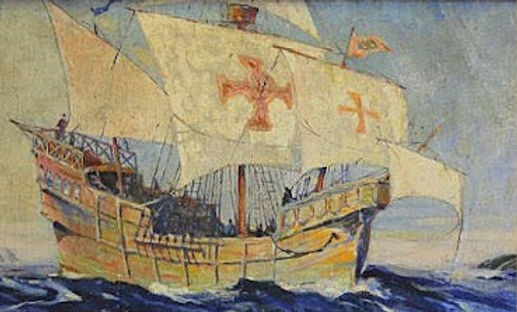
The San Antonio - the gem of Magellan's fleet
Overview
Ferdinand Magellan was a Portuguese explorer who sailed for Spain. Between 1519 and 1522, he led the first expedition to circumnavigate (sail all the way around) the Earth. Although Magellan did not complete the journey himself, his expedition proved that the world could be travelled by sea.
Reasons for the voyage
Magellan’s expedition was driven by:
-
Economic motives → access to valuable spices
-
Finding new trade routes
-
Competition between European powers (Spain vs Portugal)
-
Exploration and expansion of global knowledge
Significance of his journey
-
Proved the Earth could be circumnavigated
-
Demonstrated the vast size of the Pacific Ocean
-
Expanded European understanding of global geography
-
Opened new possibilities for global trade routes
Quick Summary
-
Magellan led the first journey around the world
-
He was searching for a trade route to the Spice Islands
-
His voyage showed the true size of the Earth
-
His crew completed the journey after his death
Main Voyage (1519–1522)
Ships: Trinidad, San Antonio, Concepción, Victoria, Santiago
Route:
-
Spain → South America → Pacific Ocean → Philippines → Indian Ocean → back to Spain
Purpose:
-
Find a western sea route to the Spice Islands (Indonesia)
Achievements:
-
Discovered the Strait of Magellan
-
Led the first crossing of the Pacific Ocean
-
Completed the first global circumnavigation (by his crew)
Key Events
-
Faced storms, starvation and mutiny
-
Many sailors died during the long Pacific crossing
-
Magellan was killed in 1521 in the Philippines
-
The ship Victoria, led by Juan Sebastián Elcano, returned to Spain